
Inside the rise of self‑driving labs and AI‑led scientific discovery
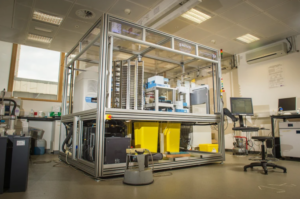
Advances in artificial intelligence are beginning to redefine how experiments are designed and carried out in the lab. A recent Nature Technology feature on ‘self-driving’ labs, explores what this shift could mean for the future of scientific research.
Research laboratories have used robots to automate routine work for decades. But humans were always pulling the strings. They were the ones developing the hypotheses and deciding which experiments were needed to test them. Now that paradigm is changing. Using artificial intelligence and large-language models, scientists can empower their robots to first conceive of a strategy to solve a problem and then execute it on its own. Though still in their infancy, the systems are evolving fast. What that means for the future of lab research remains to be seen.
Read the full Nature Technology feature →
Discover how your organization can promote your research in Nature’s Technology Features >>
About Nature Technology Features:
Nature Technology Features are special features published in Nature spotlighting scientists and the technologies they choose. Organizations are invited to collaborate and advertise their technologies alongside the Nature features.
Each feature provides essential insights that can be readily implemented in laboratories around the world, making it the perfect platform for your brand to shine.
This year’s topics include:
Technologies to Watch, PhD survey/AI, Self-driving labs, MPRAs, Antibiotic Discovery /AI, Virtual cells/systems biology/PhysiCell (Fertig), Epigenome editing (ie, CRISPR and variants), Quantum Computing in Biology, What Can’t We Do With Genome Editors?, Cell-free protein expression.
